

Brief analysis of UV-LEDread count [1056] release time:2019-12-24 19:31:00
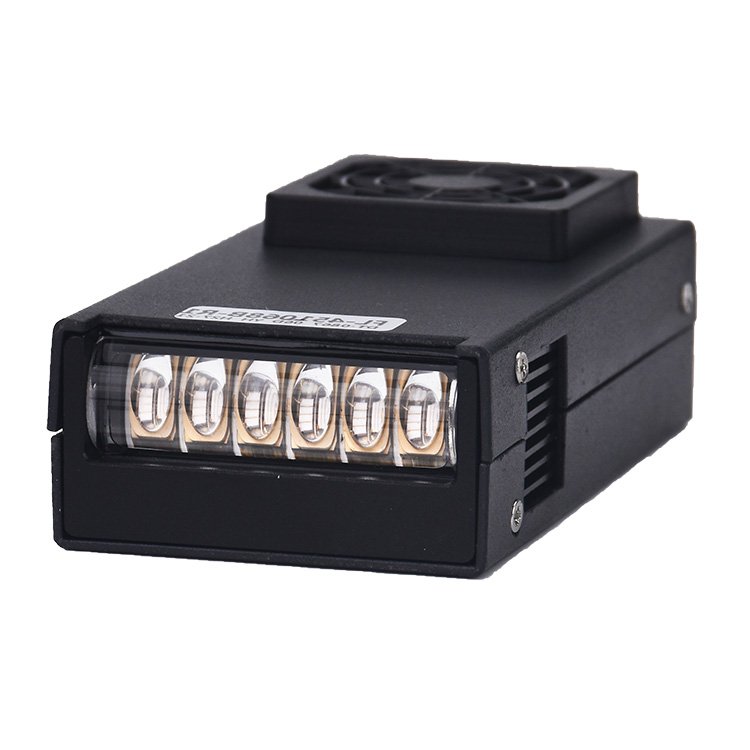
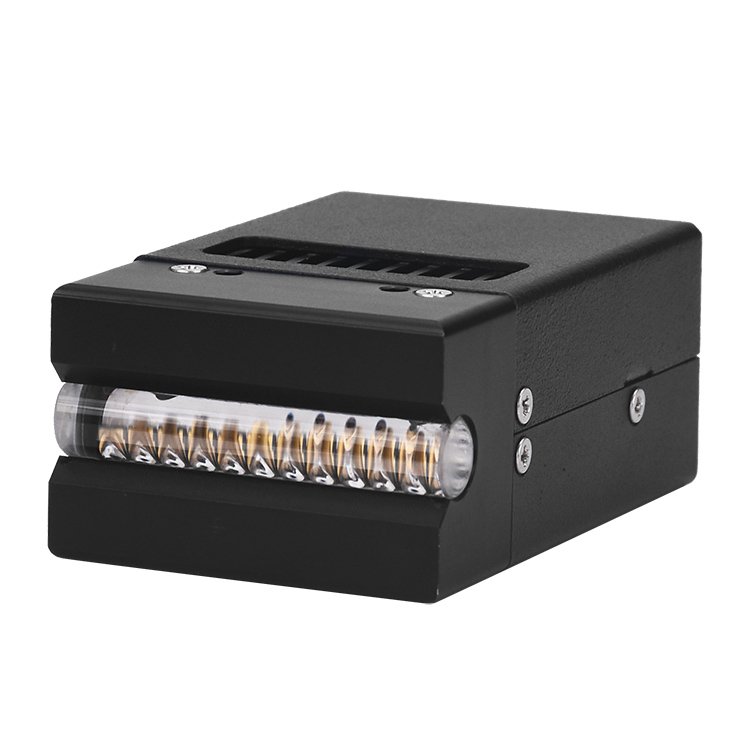
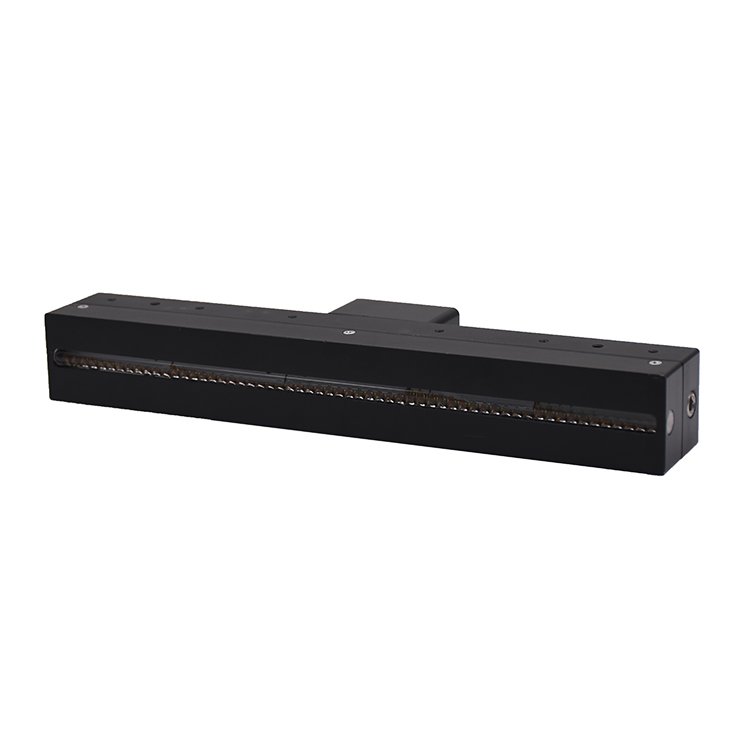
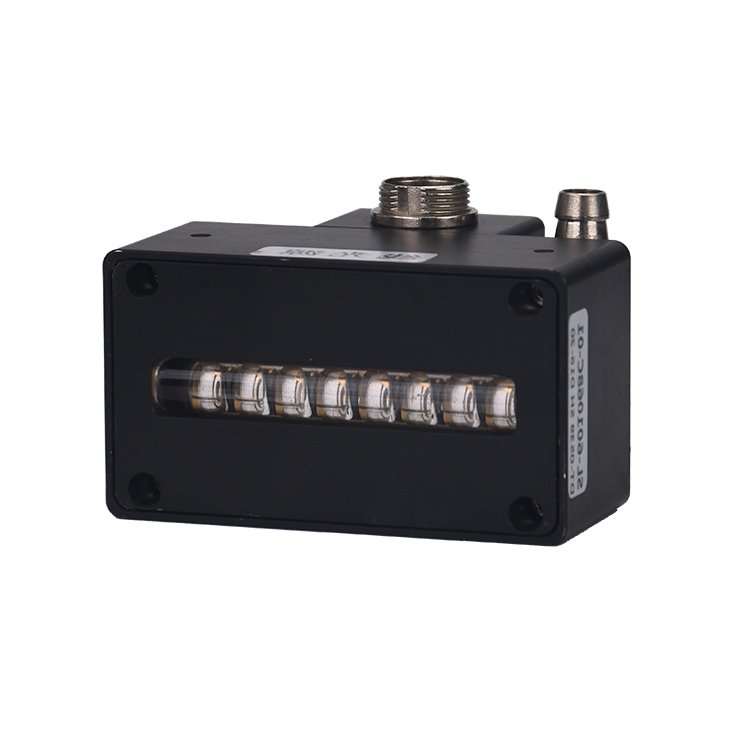
Discuss first UV Before LED, we need to clarify a few basic concepts to ensure that we are all talking about the same thing and avoid being arrogant. Here, UV refers to UV coating, UV ink, UV glue Adhesives and other UV curable materials; LED specifically refers to UV LED light sources; UV-LED is defined as "using UV LED light sources as radiation sources to achieve curing of UV materials."
Due to changes in light sources (the difference between LED and mercury lamps will be discussed in detail later), the UV coating formula system has changed and the entire coating and curing process has changed. In addition, the curing light source used in traditional UV coatings is medium-high pressure mercury lamps. Due to the impact of energy conservation, environmental protection and other policy factors in the past two years, and also benefiting from the rapid development of UVLED (ultraviolet LED), it has the basis for industrial application, so a UV-LED boom has set off in the market. Emerging things always attract everyone's attention and pursuit, but as a practitioner, it is necessary to have a clear understanding of UV-LED. Here, I will share with you some of our experience in research in the field of UV-LED in the past two years. Regarding the UV-LED system, from technology to market, we believe that there are five directions that need to be focused on research.
UV-LED light curing research
UV-LED has been defined before, which is to use ultraviolet LED light sources as radiation sources to achieve curing of UV materials. Therefore, achieving curing is the first point of all research. In light curing, light (energy source) and UV materials (receptors) are essential. Changes in light will inevitably bring about the reconstruction of the balance of the entire system. The core of this is the interdisciplinary research and development of the docking of UV coatings and LED light sources. As we all know, the shorter the wavelength of LED, the higher the energy level, and the higher the price; while the lower the energy required for photoinitiator excitation, the longer the absorption wavelength, and the higher the price. Light source and initiator happen to have a seesaw relationship, so expanding the boundaries of their respective capabilities and finding the best balance point between LED light source and UV materials has become the focus of UV-LED research and development.
Research on LED light source system
The development and application of mercury lamp technology has been very mature, so traditionally we regard mercury lamps as standard light sources. The development of UV LED has just started, and the future development space is still huge; in addition, the LED industry chain is very long, from crystal growth, chip cutting, chip packaging, to the integration of light source modules, and also involves power supply control and heat dissipation system design, etc., each step has an impact on the final product.—— UVLED light source The quality of LED products has a very important impact, so understanding and expanding the capabilities boundaries of LEDs is crucial to the research and development of the entire UV-LED system.
1. The difference between LED light source and mercury lamp (advantages, disadvantages, public misunderstanding of LED)
It is said that knowing oneself and knowing the enemy is the best way to win. Since we want to use UVLED to replace the traditional mercury lamp, we must first understand the difference between mercury lamps and LED lamps, what are the advantages and disadvantages of each, etc. Because UV paint can be cured, it is because the photoinitiator in the formula absorbs ultraviolet light of a certain wavelength and generates free radicals (or cations or anions) to initiate the polymerization of monomers.
We know that the emission spectrum of mercury lamps is continuous, ranging from ultraviolet to infrared, especially the light intensity in the UVB to short-wave UVA section is relatively concentrated, while the emission spectrum of LED is relatively narrow, and the common peaks are 365nm and 395nm (including 385, 395, and 405nm).
Currently, the main thing that can be industrialized is near-ultraviolet light in the UVA band, mainly the LED light sources with two wavelengths of 365nm and 395nm shown in Figure 1. In this wavelength range, the molar extinction coefficient of most initiators is relatively low, so UV-LEDs generally have low initiating efficiency and oxygen inhibition. Serious problem, not conducive to surface drying (Note: At present, many UVLED manufacturers or LEDUV coating manufacturers claim that LEDUV has good polishing properties. Strictly speaking, it is the result of poor surface curing. The difficulty is not good polishing properties, but how to achieve controllable polishing properties, which can be both wear-resistant and easy to polish. There are even some manufacturers that add a mercury lamp behind the LED lamp, but the real effect is actually the mercury lamp. ) However, we also see that in the two bands of 365nm and 395nm, the light intensity of LED is much stronger than that of mercury lamps, which is beneficial to the deep curing of UV materials (many traditional UV curing Equipment, a gallium lamp (main emission wavelength is 415nm) will be added behind the mercury lamp, the purpose is to strengthen deep curing. )
The second thing we want to talk about is the energy-saving issue of LED. Generally speaking, everyone thinks that UVLED is more energy-saving than mercury lamps. Many manufacturers even have slogans that using LED can reduce energy consumption by 70%. In fact, there are big misunderstandings here, and there are two reasons: first, some companies are sensationalizing and exaggerating; second, many people do not understand LED at all and confuse the two concepts. Those who hold this view are generally based on the conclusion that "only 30% of the light emitted by mercury lamps is ultraviolet light, while all the light emitted by UVLEDs is ultraviolet light." What really affects the energy consumption of the system is the photoelectric conversion efficiency and effective light efficiency. The photoelectric conversion efficiency of mercury lamps is very high, but most of the light emitted by mercury lamps is visible light and infrared light. Only 30% of the ultraviolet light required for curing UV materials is used, while UVLEDs The photoelectric conversion efficiency of UVA is much lower. At present, the photoelectric conversion efficiency of UVA is only about 30% (actually similar to the ultraviolet light efficiency of mercury lamps), and according to the principle of energy conservation, the remaining 70% of the electricity is converted into heat (the only difference is that the heat of the LED is dissipated from the back through the lamp panel, and the light-emitting surface has no heat. This is where the title of LED "cold light source" comes from; while the heat of the mercury lamp is emitted from the front through the reflector and infrared rays. ), which is why UVLED light sources generally require air cooling for heat dissipation, and high-power UVLED light sources also need to be equipped with a water cooler to dissipate heat for the lamp head based on 70% of the electrical power of the light source. What can truly achieve energy saving is that LEDs can be used out of the box, can achieve precise illumination through optical design, and improve effective light efficiency. These require the cooperation of infrared detection, intelligent control, etc. Most UVLED equipment manufacturers currently on the market do not have enough strength to conduct research and development in this area.
The third and most important point is environmental protection. The environmental pollution of mercury lamps mainly has two points: first, the emission spectrum of mercury lamps has far-ultraviolet light below 200nm, which will produce a large amount of ozone (many workshop workers reported that mercury lamps smell stinky, which is the root cause); second, the service life of mercury lamps is relatively short, only 800-1000 hours, and the secondary pollution (mercury pollution) caused by discarded mercury lamps has always been a difficult problem to solve. (It is reported that the annual energy consumption of processing mercury waste requires the power generation of two Three Gorges Hydropower Stations. What’s more terrible is that there is currently no good way to completely process waste mercury). LEDs have no such problem. With the Minamata Convention on Mercury officially entering into force in my country on August 16, 2017, mercury removal has been put on the agenda. Although there is a note in the Convention that mercury fluorescent lamps for industrial production for which there are currently no alternative products are not included in the restricted list, it is also noted that if a party has an alternative, it can request that the relevant products be added to the restricted list. Therefore, when mercury lamp products for UV curing can be completely eliminated depends on the development of UVLED in the field of UV curing.
Other advantages of LED are: LED has a narrow wavelength and can achieve precise curing (on the one hand, it can achieve localized precise curing, such as 3D printing; on the other hand, different degrees of curing can be better achieved through the selection of different initiators); the LED light source is a lamp bead structure, and the length, width, illumination angle, etc. can be adjusted according to needs, and can be made into point light sources, line light sources, and surface light sources to meet different illumination process requirements.

2. Light source parameter requirements for UV material curing
Wavelength 365nm, 395nm
Radiation illuminance (light intensity, optical power density) mw/cm^2
Total work mj/cm^2
In the process of light curing, the above three main parameters are inseparable: wavelength, light intensity and total work. The wavelength determines whether the photoinitiator can be excited. The light intensity determines the initiating efficiency of ultraviolet light, which directly affects the surface drying (antioxidant polymerization) and deep curing effects. The total work determines whether the curing can be completed thoroughly.
Compared with mercury lamps, the biggest advantage of LED is that LED has a formula and is adjustable. Within the LED's own capabilities, the formula can be adjusted to the greatest extent according to the curing needs. In the UV-LED light curing experiment, they are constantly expanding their capabilities and finding a balance point. As far as LED is concerned, it is based on the formula of the paint to find the light source parameters of the LED required to achieve optimal curing.
3. The light-emitting principle of LED and the development status of UVLED chips
According to the principle of electronic transition (not detailed, interested friends can search it on their own), the electrons of the atom return from the excited state to the ground state and release energy in the form of radiation of different wavelengths (emitting electromagnetic waves of different wavelengths).
So if we want to make something that can emit ultraviolet light, the first method is to find an atom whose energy difference between its electronic excited state and its ground state is just within the ultraviolet range. Our traditional mercury lamp is currently the most widely used UV light source.
The second method is to use the principle of semiconductor luminescence (not detailed, interested friends can search it on their own). Simply put, after applying a forward voltage to the luminescent semiconductor, the holes injected from the P region to the N region and the electrons injected from the N region to the P region recombine with the electrons in the N region and the holes in the P region within a few microns near the PN junction, producing spontaneously radiated fluorescence. ) to manufacture UV band light sources. Everyone knows that the band gap of Group III and V semiconductor materials from aluminum nitride to gallium nitride or indium gallium nitride (InGaN) series just falls between the blue light and ultraviolet light bands. By changing the ratio of aluminum indium gallium nitride materials, we can produce ultraviolet and visible light in various bands.
Although theoretically, any wavelength of light can be achieved through the ratio of luminescent materials, restricted by various conditions, the types of UVLED chips that can currently be commercially produced are still very limited. High-power chips for industrial applications are basically concentrated in the UVA band of 3655nm-415nm. UVB and UVC have also shown a booming trend in the past two years, but they are basically limited to the civilian consumer market for low-power applications such as disinfection and sterilization.
There are several main reasons for this: 1. The structure of the crystal material determines the luminous efficiency (photoelectric conversion efficiency). Because 365-405nm in UV-A can also use gallium nitride (GaN) and indium gallium nitride (InGaN) with high luminous efficiency. The entire structure of UV-B and UV-C is made of aluminum gallium nitride (AlGaN) material with low luminous efficiency, instead of the familiar gallium nitride and indium gallium nitride, because these two materials absorb ultraviolet light below 365nm wavelength. The result is that the luminous efficiency of UVB and UVC is extremely low. Taking LG's 278nm chip as an example, the entire photoelectric conversion efficiency is only 2%. 2. According to the principle of energy conservation, a photoelectric conversion efficiency of 2% means that 98% of the electricity is converted into heat, and the service life and luminous efficiency of the LED chip are inversely proportional to the temperature. Such a high calorific value requires extremely high heat dissipation. According to the existing heat dissipation methods, it is impossible to effectively dissipate high-power UVB and UVC chips. 3. In order to protect the LED chip, the chip must be packaged. LED emits in all directions and requires the installation of a lens to condense light. Except for quartz glass, the ultraviolet light transmittance of most materials is very low. The shorter the wavelength, the transmittance drops in a straight line. In this way, when the luminous efficiency is inherently low, a large part is absorbed by the lens, and the light that can be transmitted is even weaker, making it almost impossible to realize industrial applications. 4. The current UVB and UVC chips are also based on UVA reactors to grow crystals. In addition to the defects of the material itself, there are also problems such as the thermal expansion coefficient mismatch between the substrate and the crystal, resulting in extremely low crystal yields and high costs.
Overall, due to the low luminous efficiency, high cost, and higher requirements for system heat dissipation of UVB and UVC, high-power UVB and UVC light sources for industrial use will be difficult to achieve until there is a more significant breakthrough in technology.
4. Key points of research and development of LED light source system
LED chips are only an important part of LED light sources. When we research and develop LED light sources, we need to conduct systematic research as a whole. In addition to the wavelength of the LED, it also involves a series of packaging processes, optical design, heat dissipation system, power supply system, intelligent control system, etc.
At present, there are four main packaging structures of LED chips, namely: formal structure, flip-chip structure, vertical structure and three-dimensional vertical structure. At present, ordinary LED chips adopt a formal structure of sapphire substrate. The structure is simple and the manufacturing process is relatively mature. However, due to the poor thermal conductivity of sapphire, the heat generated by the chip is difficult to transfer to the heat sink, which is limited in high-power LED applications.
Flip chip packaging is one of the current development directions. Compared with the formal structure, the heat does not have to pass through the sapphire substrate of the chip, but is directly transmitted to the silicon or ceramic substrate with higher thermal conductivity, and then dissipated to the external environment through the metal base. In addition, since the flip-chip structure does not require external gold wires, the integration density of the chip can be very high, increasing the optical power per unit area. However, both the flip-chip structure and the formal structure have a common defect, that is, the LED p and n electrodes are on the same side of the LED, and the current must flow laterally through the n-GaN layer, resulting in current congestion and high local heat generation, which limits the upper limit of the drive current.
The vertical structure blue light chip is produced on the basis of formal assembly. This kind of chip is a traditional sapphire substrate chip that is inverted and bonded to a silicon substrate or metal substrate with good thermal conductivity, and then the sapphire substrate is laser-stripped. Chips with this structure solve the heat dissipation bottleneck problem, but the process is complex, especially the substrate conversion process, which is difficult to implement and the production qualification rate is also low. However, with the development of technology, the vertical packaging of UVLED has become more and more mature.
Now a new three-dimensional vertical structure has been proposed. Compared with vertical structure LED chips, the main advantage of three-dimensional vertical structure LED chips is that it does not require gold wires, making its package thinner, with better heat dissipation, and easier to introduce larger drive currents. However, there are still many problems that need to be solved before the real application of three-dimensional vertical structures.
Since the luminous efficiency of UVLEDs is generally lower than that of lighting LEDs, in order to achieve higher light extraction efficiency, vertical structure packaging is generally selected.
Since LED emits light in all directions, in order to achieve higher effective light efficiency (light efficiency of frontal illumination) when the luminous efficiency is not high, scientific and reasonable optical design is required, such as reflective cups, primary lenses, secondary lenses, etc. In addition, due to the high light attenuation rate of ultraviolet light in the medium, multiple evaluations must be made when selecting the material of the lens (quartz glass, high borosilicate glass, tempered glass, etc.), and try to choose a material with high ultraviolet light transmittance (also to avoid the material absorbing light and causing the temperature to rise under long-term ultraviolet light exposure).
As mentioned before, according to the principle of conservation of energy, when electrical energy is converted into light energy, a large part of it is also converted into heat energy (UVA band, electricity: light: heat = 10:3:7), and the effective service life of the LED chip is closely related to the festival temperature. In the process of light curing, in order to provide higher Optical power density often requires high-density integration of LED chips, which places high requirements on heat dissipation. How to achieve efficient heat dissipation and ensure that the temperature of all LED chips is within a reasonable and balanced range also requires scientific design, computer simulation and actual testing.
Research on UV coating formulations
1. Limitations of photoinitiators, think about the activity of resin and monomers from a system perspective
From the previous introduction of LED, we can see that the current high-power LED light sources suitable for industrial production have wavelengths limited to the UVA band, and are mainly in the band above 365nm. After determining the capability boundary of the LED light source, looking back at the initiators, the range of options becomes very limited. Most initiators have very low molar extinction coefficients in the band above 365nm. In order to solve the problem of low LED photoinitiator efficiency, in addition to the development of the initiator itself, we should also think from a systemic perspective and integrate resin, monomers, initiators, and even some auxiliary additives into a whole to study and improve the curing efficiency of LED UV.
2. To realize LED curing coating formula and coating process design (influence of initiator, resin, monomer, temperature, surface dryness, solid dryness, pigments and fillers)
In order to improve the initiator's absorption of long-wavelength ultraviolet light, it is often necessary to add benzene rings, N, P and other atoms into the molecular structure. This not only improves the photoinitiator's absorption of long-wavelength ultraviolet light, but also deepens the color. And because the light absorption efficiency of the initiator is too low, in order to increase the overall reaction speed of the paint, a large amount of highly reactive resins and monomers need to be added, usually high-functionality acrylic resins and monomers. This will also cause the problem of high hardness and brittleness of the paint film, which limits the application scope of the paint film.
Of course, the molar extinction coefficient of LED photoinitiators is generally low, and it also has its own unique advantages. The transmittance of ultraviolet light in the coating is high, which is beneficial to the deep curing of thick coatings.
3. Different storage, transportation, construction conditions and construction techniques have different performance requirements for the coating itself.
In the field of coating, there are different construction techniques such as roller coating, spray coating, shower coating, etc., which have different requirements for the viscosity of the coating, and different substrates also have different requirements for the wettability, adhesion, etc. of the coating. The transportation and storage conditions also have different requirements for the storage stability of the coating itself, so when designing the coating formula, these factors must be taken into consideration.
4. Different application requirements for paint film performance
Because different application fields have different requirements for the performance of paint films, such as gloss, color, hardness, toughness, wear resistance, impact resistance, etc. Therefore, when developing coatings, the balance between curing effect and paint film performance must be taken into consideration.
Research on coating technology
Painting is a system engineering, and the optimization of the painting process can further broaden the application boundaries of UV-LED. As the saying goes, there are three parts of paint and seven parts of work. Whether it is paint or light source, the final delivery must be achieved through painting. Combining UV coatings and LED light sources to optimize the coating process can also largely make up for the shortcomings of coatings and light sources. For example, heating can be used to reduce the viscosity of coatings with higher resin content and higher viscosity at room temperature to meet the requirements of different coating methods; heating can also be used to make the system more fluid, increase molecular activity, make the initial curing reaction more thorough, and make the paint film surface smoother, etc.
Research on upstream and downstream industrial chains
In the past two years, photoinitiators have been out of stock and prices have skyrocketed due to the environmental crisis, which has caused personal pain to downstream companies and greatly restricted the development of LEDUV. It can be seen that whether the upstream and downstream industrial chains are connected and whether the supply chain system is smooth is the foundation and guarantee for whether an industry can develop healthily and whether products and technologies can achieve market success. Although many industries are created from scratch, technological innovation, industrial development, and the explosion of demand are complementary and mutually reinforcing, but we must also comprehensively consider these issues in the process of marketization.
In addition, from an investment perspective, conducting research and layout of the upstream and downstream industry chains can, on the one hand, ensure stable supply of products when they enter the market, and on the other hand, share the dividends of industry development.
From the perspective of product research and development, on the one hand, we can achieve technological breakthroughs through innovation, improve the construction of the industrial chain, and form solutions; on the other hand, we should formulate solutions through the integration of existing resources based on the existing supply chain system and industrial chain characteristics. R&D emphasizes innovation and advancement, while industrial production pays more attention to stability and reliability. The availability of raw materials is also an issue to be considered when developing formulas.
All in all, from technology to products, from R&D to market, we need more overall thinking, more open cooperation, and strong resource integration capabilities. Soldiers have no normal state, water has no constant shape, and there is no one-size-fits-all trick that can conquer the world. In the application market, there is no best, only the most suitable. Therefore, there is no end to exploration. We can only stay true to our original aspirations and forge ahead.