


Development overview and application case analysis of China's plant lighting factoriesread count [569] release time:2020-03-25 20:01:00
The light source ranges from the sun to LED lights that automatically adjust lighting, making efficient use of "every beam of light".”; From relying on the soil to absorb nutrients to planting in nutrient solutions or matrix materials, the production environment is completely sealed, and planting can also be done in "dark" underground spaces.
Customize a comfortable “home” for crops”
Without sunlight, rain, dew, and soil, can plants grow in factories built of reinforced concrete? Is the output guaranteed?
“The plant factory adopts an automatic compensation system for temperature, humidity and light, and is intelligently controlled by the Internet. A variety of high value-added agricultural products that have been artificially domesticated can be mass-produced in the plant factory. ”He Chaoxing, a researcher at the Vegetable and Flower Research Institute of the Chinese Academy of Agricultural Sciences, replied.
Following this answer, the author went to plant factories in Beijing, Xi'an and other places to see how the plants in the factories grow and how they are introduced into the homes of ordinary people. How is this emerging production method being applied and promoted in our country?
How do plants grow in factories?
The growth of plants is inseparable from light, water, nutrients, suitable temperature, etc. As a workshop for plant growth, a plant factory is essentially an integrated control of these elements.
In late December last year, the air quality index released by the Beijing Environmental Protection Monitoring Center showed that 9 out of 11 days were polluted, of which 8 days were severely polluted to moderate or severe. Affected by haze weather, greenhouses in Changping District generally lack light. The growth and development of strawberries are affected by the lack of light, and the launch time is delayed by about half a month than originally planned.
Berry farmers who grow strawberries in plant factories don’t have to wait for the wind to come. Through the light monitoring of light sensors, the IoT system of the plant factory can automatically adjust the light, so that the sun can still shine brightly in hazy weather.
Does the lighting system that replaces the "sun" require a lot of power?
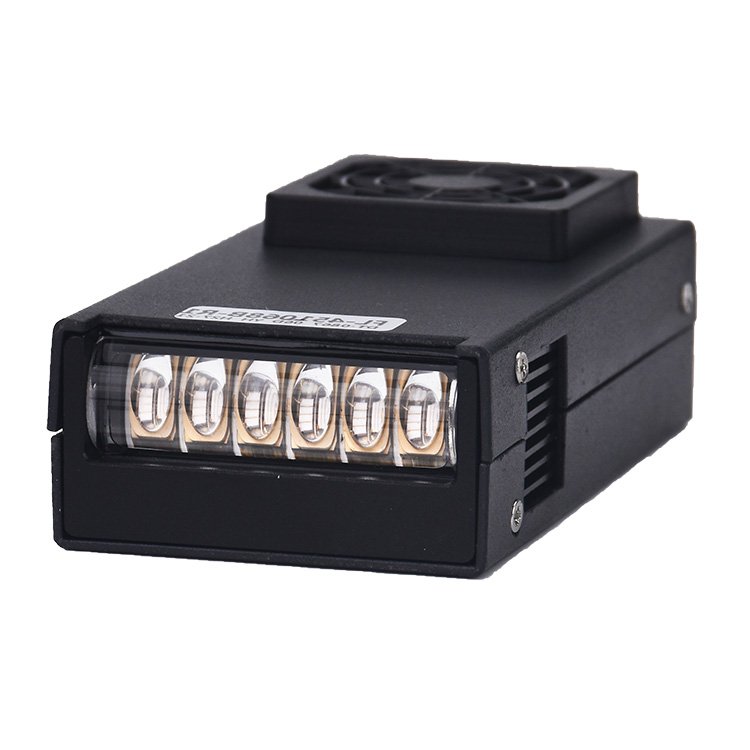
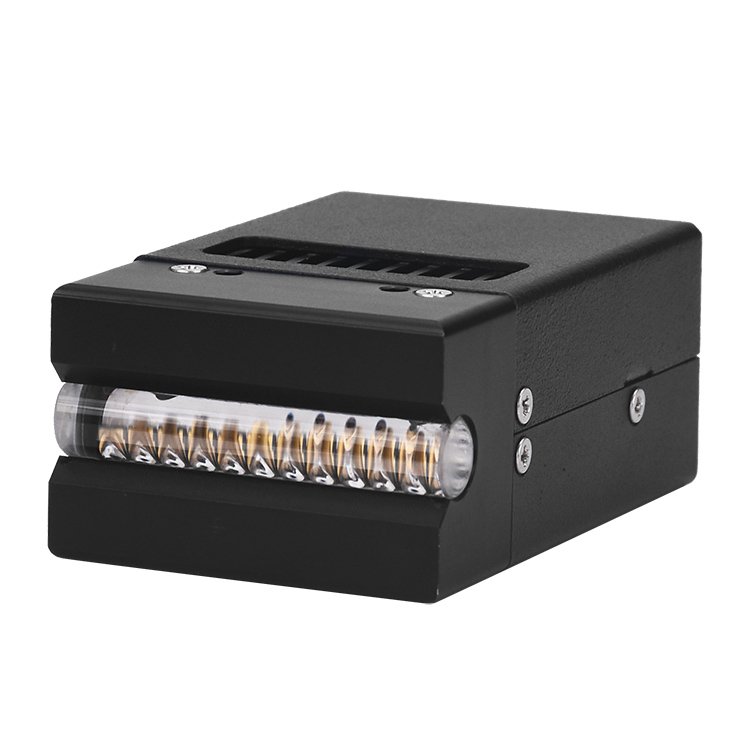
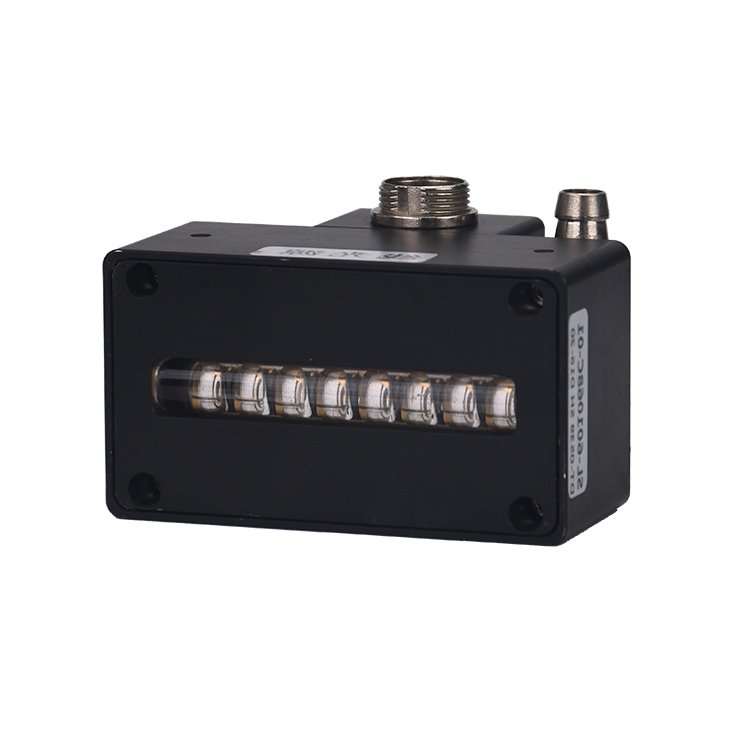
“Lighting does account for a considerable part of the energy consumption of plant factories. In order to save this part of energy, we have been studying LED plant light efficiency lighting technology. ”Wang Qi, the person in charge of Xutian Photoelectric Plant Factory in Xi'an, Shaanxi Province, said that through research on the wavelength of light, light quality ratio, photosynthetic photon flux, etc., we can find the best lighting spectrum suitable for different plant species and different growth stages, and we can achieve efficient use of "every beam of light."
Beijing is one of the most water-scarce big cities in the world. The city’s per capita water resource is about 100 cubic meters, which is only 1/21 of the country’s and 1/77 of the world’s. The level of water shortage is even lower than the 365 cubic meters of the “desert country” Israel. Under the constraints of water resources ceiling, Beijing's urban modern agriculture has been looking for a water-saving and efficient way.
After Laba, it was extremely cold. In the Nongzhong Wulian Plant Factory in Mafang Town, Pinggu District, Beijing, fresh vegetables such as houttuynia cordata, toona sinensis buds, and mint leaves are piled high on top of each other, growing vigorously and giving off a moist feeling.
“These vegetables are grown in nutrient solution. In addition to the losses absorbed by normal plant growth, the environmental evaporation loss is almost zero. ”Yao Xu, the person in charge of the plant factory, said that through the integrated circulation of water and fertilizer in a closed environment, the water saving rate can reach more than 93% compared to field planting.
Farmers often say that plants cannot grow without the land. In fact, what plants really need to grow is not the land, but the nutrients in the soil. In plant factories, crops are grown in nutrient solution or matrix materials made of gravel, vermiculite, coconut bran, straw, etc. The nutrients required for plant growth are supplied by the prepared nutrient solution, making food safety more controllable, while also avoiding repeated cropping and saving land.
According to Hu Hengyang, inspector of the Rural Economic Department of the National Development and Reform Commission, according to the current situation, my country needs 3 billion acres of land to fully realize self-sufficiency in agricultural product consumption. The national sown area is around 2.3 billion acres year-round. In other words, about 700 million acres of land must be supported by foreign resources. “Plant factories can produce several times agricultural products on the same land and are worth exploring. ”Hu Hengyang said.
Nongzhong Wulian's plant factory covers an area of less than 10 acres and has three floors. High-end edible fungi are cultivated on the first floor, wild vegetables are grown on the second floor, and solanaceous vegetables are mainly grown on the third floor. When operating at full capacity, it can produce 7 million kilograms of vegetables, mushrooms, and fruits annually. Last November, when Beijing Municipal Party Committee Secretary Guo Jinlong and Mayor Wang Anshun visited the Nongzhong IoT Plant Factory for investigation, they fully affirmed the plant factory’s water and energy conservation and efficient use of land.
Freed from dependence on land, plant factories have become “pervasive and pervasive”. In December last year, Asahida Optoelectronics used an underground civil air defense project in Xi'an to build a 640-square-meter plant factory, turning the originally dark underground space into a world full of green plants.
To reduce costs, advanced equipment also needs to be localized
As an emerging production method, plant factories are commonly used in developed countries such as the Netherlands, Japan, and the United States. “The development of foreign plant factories is relatively mature, but there is also a problem that the investment cost is too high, which is not conducive to promotion. ”Yao Xu said that plants are extremely adaptable, and as long as variables such as light, temperature, and humidity are controlled within appropriate ranges, normal growth can be ensured. For example, the imported temperature control guidance system can adjust the temperature variable to 0.01°C, which is equivalent to the control level of space capsule planting, but its contribution to output is minimal, and the investment cost is dozens of times higher than that of domestic domestic equipment.
At the Nongzhong IoT Plant Factory, the reporter saw that various green vegetables were piled six or seven levels one on top of the other. “The height of each layer is different, and the height needs to be adjusted at different stages of plant growth. Foreign imported equipment can automatically adjust the height, while our self-developed equipment can adjust semi-automatically. ”The change from automatic to semi-automatic is not a lack of technical level of local equipment, but a choice based on a better understanding of the market.
Most edible fungi are produced in autumn and winter, because the normal growth environment of edible fungi usually has low temperatures and high humidity. Therefore, during the annual production process, most edible fungi production requires cooling and ventilation, and the energy consumption required becomes one of the main costs in the operation process.
The design of the Nongzhong IoT Plant Factory relies on an effective cycle that relies on the conditions required for edible fungi, green leafy vegetables, solanaceous vegetables, etc.: the edible fungi absorb oxygen, release carbon dioxide, and increase indoor temperature and humidity, coordinating the natural growth of complementary green leafy vegetables and solanaceous vegetables.; Then green leafy vegetables and nightshade vegetables absorb carbon dioxide and reduce indoor temperature and humidity, coordinating the normal growth of edible fungi. In addition, the inorganic nutrients metabolized by edible fungi in different processes are used to supplement the growth of vegetables, and part of the organic matter eliminated during the growth process of vegetables is used to supplement the production of edible fungi, which greatly reduces energy consumption and material consumption during the operation process, allowing the plant factory to enter a comprehensive and complementary production model.