


UV standards topic 2: Analysis of the current status of light sources, equipment and application system standardsread count [747] release time:2020-04-01 22:25:00
1. Analysis of current status of light source and equipment standards
1. Module
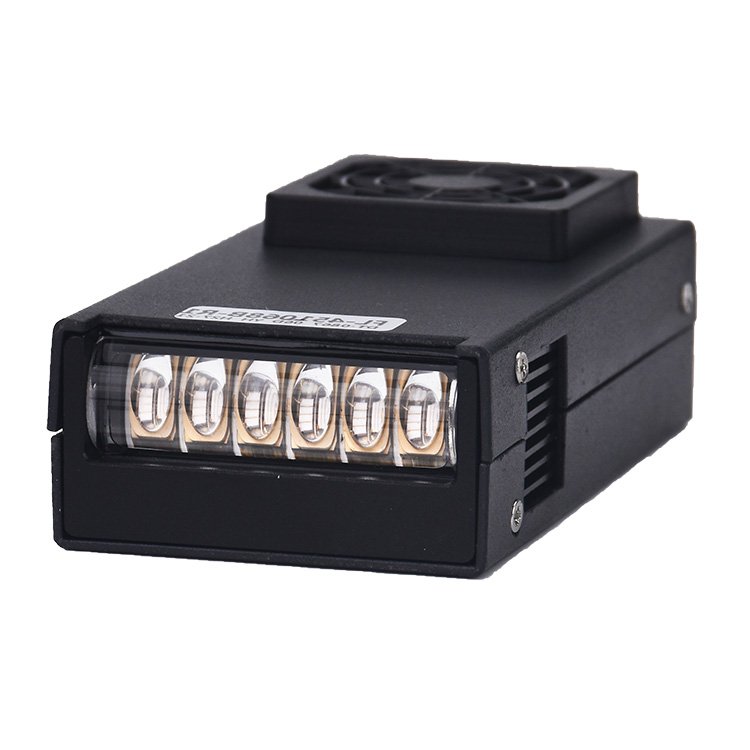
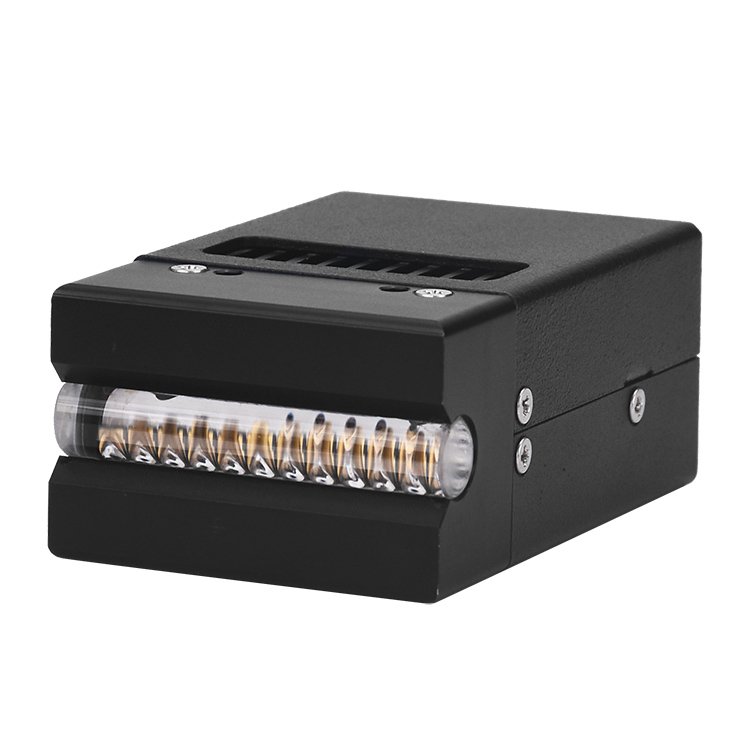
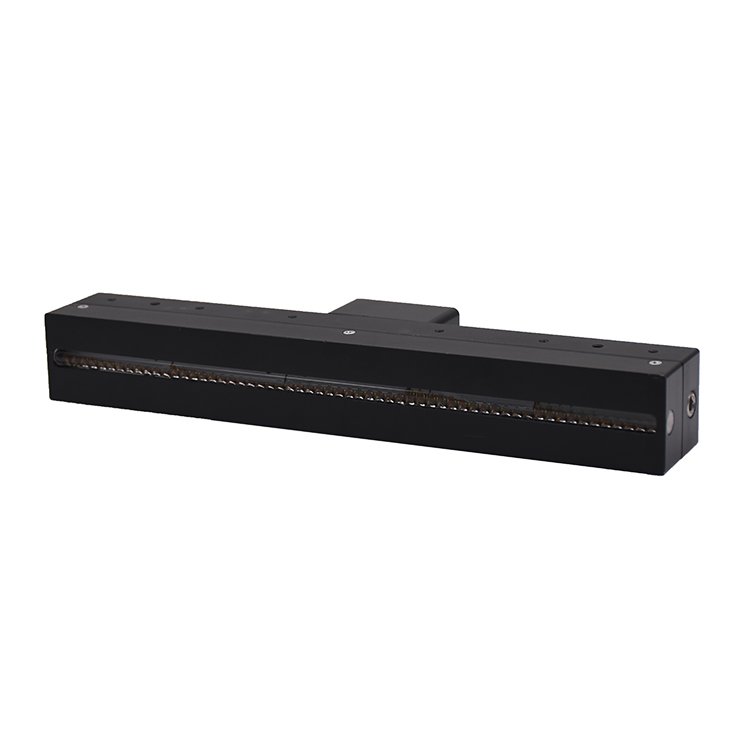
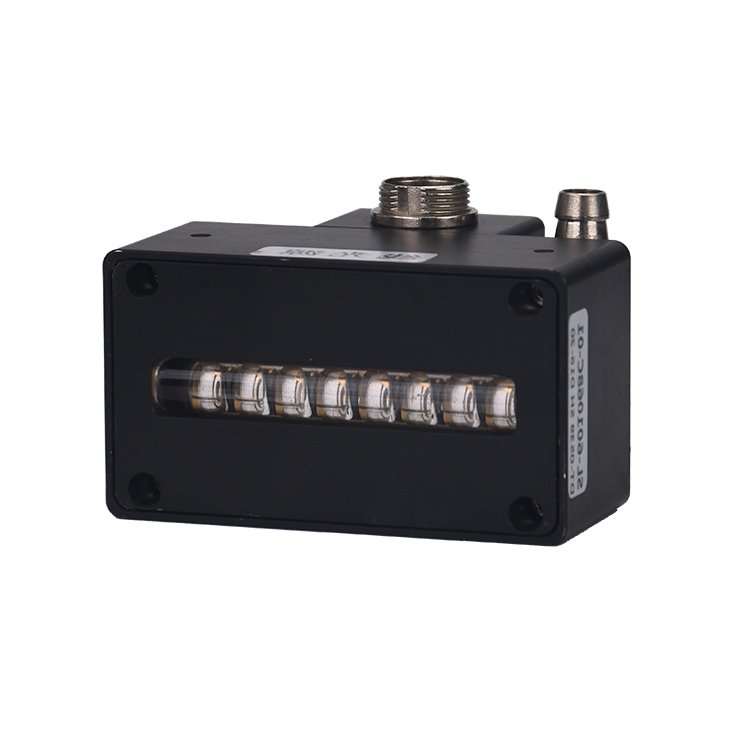
In GB/T 24826-2016 "Terms and Definitions of LED Products and Related Equipment for General Lighting", the definition of LED module is "an LED light source without a lamp head, including one or more LED packages mounted on a printed circuit board, and may include one or more components, such as electronics, optics, machinery, thermal components, interfaces and control devices, etc."
When applying UV LED, it can be divided into two situations. One is to directly replace the original UV light source (including lamp holder), and the other is to design a new interface LED module (without lamp holder). For general lighting, LED bulbs and LED tube lights are First As an alternative, LED street lights, LED downlights, and LED spotlights are mostly direct replacements of lamps, and the original light source lamp heads (such as E40, E27, E14, GU10, etc.) are no longer used. In applications such as light curing, most LED modules are currently developed directly according to the form of LED light emission. In the future, with the improvement of UV LED radiation efficiency, there may gradually be solutions that directly replace traditional UV light sources.
2. Light source
GB 19258-2012 "Ultraviolet Germicidal Lamp" stipulates low pressure mercury steam Ozone or ozone-free lamps produced by discharge and quartz glass, with a peak wavelength of 253.7nm and a power of less than 65W; The initial UV irradiance of double-ended lamps and single-ended lamps (1m test distance, double tubes) is not less than 93% in Table 2-1 ; The average life of the lamp should not be less than 5000h, the maintenance rate of ultraviolet radiation flux in 2000h should not be less than 85%, and the maintenance rate of ultraviolet radiation flux at the end of life should not be less than 65%.
Table 1 GB 19258-2012 UV radiation illumination requirements for double lamps
GB/T 30809-2014 "Ultraviolet light source for photocatalytic material performance testing" specifies the requirements for ultraviolet light sources for photocatalytic material performance testing, excluding LED ultraviolet light sources; It is stipulated that the ultraviolet light source should account for more than 80% of the total light output power of the low-pressure gas discharge lamp in the light output of the lamp tube, with 365nm as the main wavelength, and under the condition of a radiation distance of 1000mm±1mm, the light radiation illuminance rating requirements are as shown in Table 2-2. At the same time, it is stipulated that the average life of the ultraviolet light source is not less than 5000h. When the normal ignition point is 2000h, the radiation flux maintenance rate is not less than 80%. When the normal ignition point reaches 70% of the life, the radiation flux maintenance rate is not less than 65%.
Table 2 GB/T 30809-2014 UV radiation illuminance rating
YY 0055.1-2009 "Dental - Curing Light Machine Part 1: Quartz Tungsten Halogen Lamp" and YY 0055.2-2009 "Dental Curing Light Machine Part 2: Light Emitting Diode (LED) Lamp" stipulate the technical requirements for the light source used in curing light machine.
GB/T 21096-2013 "Measurement and Specification Methods for Fluorescent Ultraviolet Lamps for Health Care" provides performance regulations and measurement and evaluation methods for fluorescent ultraviolet lamps used for health care purposes, including specific requirements involving the marking of such lamps; Only type testing is involved.
3. Supporting parts
Supporting components such as driving power supply, controller, lens, ceramic substrate, heat dissipation components, lamp holder/lamp holder, etc.
4. Equipment
(1) Light curing
In QB/T 4967-2016 "Ultraviolet Light Curing Machine for Shoemaking Machinery", the UV light curing machine requires a conveying speed of 2m/min~3m/min, a UV light source spectrum range of 350nm~450nm, and a light source power density of 50W/cm~120W/cm.
YY 0055-2018 "Dental Light Curing Machine" stipulates the requirements and test methods for the optical radiation value of the light curing machine in the wavelength range of 200nm ~ 385nm and the wavelength range above 515nm.
(2) Photocatalysis
In terms of air purifiers, the country has promulgated a series of safety, energy efficiency, and performance standards such as GB4706.45-2008 "Special Requirements for Safety Air Purifiers for Household and Similar Electrical Appliances", GB36893-2018 "Energy Efficiency Limits and Energy Efficiency Levels of Air Purifiers", and GB/T18801-2015 "Air Purifiers"; If other household appliances have purification functions, they must meet GB21551.3-2010 "Special Requirements for Air Purifiers with Antibacterial, Sterilizing and Purifying Functions for Household and Similar Electrical Appliances".
GB/T18801-2015 "Air Purifier" is applicable to air purifiers for household and similar purposes, used for but not limited to the following working principles: filter type, adsorption type, complex type, chemical catalytic type, photocatalytic type, electrostatic type, plasma type, composite type, etc. Target pollutants are mainly divided into three categories: particulate, gaseous pollutants, and microorganisms.
Some other standards, such as QB/T 5217-2018 "Medical Environmental Air Purifier", JG/T 294-2010 "Determination of Pollutant Purification Performance of Air Purifier", GB/T 33017.5-2017 "Technical Requirements for Evaluation of High-Efficiency Air Pollutant Control Equipment Part 5: Air Purifier", DB31/T 1022-2016 "Measurement Method of Purification Performance of Passenger Car Air Purifier", etc.
(3) Ultraviolet sterilization and disinfection
GB 28235-2011 "Safety and Hygiene Standards for Ultraviolet Air Sterilizers" requires that "6.2.7 Disinfection Effect" requires that in the air disinfection effect test, those with a killing rate of Staphylococcus albus (8032 strains) ≥ 99.90%, or a disinfection time of no more than 3 hours with a death rate of ≥ 90% of natural bacteria are qualified. Those used for ambient air disinfection in medical institutions should also comply with the hygiene standard value of GB 15982; Applicable volume shall not be less than 30m3 ; At a distance of 30cm from the periphery of the sterilizer, the ultraviolet leakage should be ≤5μW/cm2.
HJ 2522-2012 "Technical Requirements for Environmental Protection Products Ultraviolet Disinfection Devices" stipulates the biological verification measurement requirements for drinking water, urban sewage, urban sewage recycled water, hospital sewage, and livestock farm sewage, as shown in Table 2-3.
Table 3 UV requirements for various water treatments in HJ 2522-2012
GB The 21551 series of standards respectively stipulates the general principles for the antibacterial, sterilizing, and purifying functions of household and similar electrical appliances, special requirements for antibacterial materials, special requirements for air purifiers, special requirements for refrigerators, special requirements for washing machines, and special requirements for air conditioners. Appendix A of the general rules stipulates toxicological tests for antibacterial, sterilizing, and antifungal components. Hygiene requirements for test items include acute oral toxicity test requiring acute oral toxicity (LD50) >10g/Kg body weight, Salmonella typhimurium/reverse mutation test (Ames test) being negative, in vitro mammalian cell chromosome aberration test being negative, and zebrafish acute toxicity testing requiring no poisoning symptoms after 96 hours of testing.
(4) Ultraviolet LED for general lighting
Currently, 380nm-400nm UV LED-excited phosphors are used in the industry for general lighting. Since the semiconductor lighting standard system is relatively mature, LED devices, light sources, and lamps can all refer to general lighting standards, so the attached standard schedule is no longer included in lighting-related technical standards.
(5) Trapping of insects and other organisms
Because insects have phototaxis, they can feel light in the wavelength range of 240nm (ultraviolet light)-700nm (yellow, orange). For example, the phototaxis spectrum wavelengths of mosquitoes are concentrated around 254nm-265nm and 365nm-370nm.
In agriculture and forestry, there are relevant standards for insecticidal lamps and insect trapping lamps. GB/T 24689.2-2017 "Plant Protection Mechanical Insecticidal Lamps" is under the jurisdiction of the National Agricultural Machinery Standardization Technical Committee and is applicable to electric shock and wind-powered insecticidal lamps ; NB/T 34001-2011 "General Technical Conditions for Solar Insecticidal Lamps" is under the jurisdiction of the Rural Energy Standardization Technical Committee of the Energy Industry and is applicable to insecticidal lamps powered by solar photovoltaic power generation systems. ; LY/T 1915-2010 "Technical Regulations for the Use of Insect Trap Lamps in Forests" was proposed and centralized by the Forest Pest Control Station of the State Forestry Administration. It is applicable to the use of insect trap lamps in forestry pest monitoring nationwide. Prevention and control can be used as a reference. T/CSA067-20XX "General technical requirements for highly selective LED insecticidal lamp systems for field control of cotton bollworms" is applicable to highly selective LED insecticidal lamp systems for cotton bollworms. LED insecticidal lamp systems for field armyworms, Spodoptera exigua and other lepidopteran pests can be used as a reference.
(6) Medical related applications
Ultraviolet medical related applications include: A. Ultraviolet radiation treatment of skin diseases such as vitiligo and psoriasis; B. UVB irradiation promotes the formation of vitamin D and related medical effects ; C. Tanning effect, etc. The state implements classified management of medical devices according to risk levels. According to the "Medical Device Classification Catalog", "photon blood therapy machines (ultraviolet irradiation), ultraviolet therapy machines, infrared therapy machines, far-infrared radiation therapy machines, conventional light source therapy machines, spectrum therapy devices, and strong light radiation therapy devices" belong to "6826 Physical Therapy and Rehabilitation Equipment", and the management category is Category II. According to the "Regulations on the Supervision and Administration of Medical Devices", to establish a Class I medical device manufacturing enterprise, it must register with the municipal food and drug administration bureau where the manufacturing enterprise is located. ; To start a Class II or III medical device manufacturing enterprise, you need to apply for a production license from the provincial (municipal) Food and Drug Administration.
Relevant industry standards include YY 0901-2013 "Ultraviolet Treatment Equipment", YY 0055-2018 "Dental Light Curing Machine", and some local standards.
Table 4 List of existing standards for light sources and equipment
2. Application system
1. Light curing
(1) Overview
Light curing technology is an efficient, environmentally friendly, energy-saving, and high-quality material surface treatment technology. It is known as a new technology for the green industry in the 21st century. It has the characteristics of high efficiency, wide adaptability, energy saving, environmental friendliness, and economy. The most common light-curing products are UV coatings, UV inks and UV glue Adhesive has a fast curing speed, usually between a few seconds and tens of seconds.; It can be applied to a variety of substrates, such as paper, wood, plastic, metal, leather, stone, glass, ceramics, etc. It is especially suitable for some heat-sensitive materials (such as paper, plastic or electronic components, etc.).
UV curing Application standard light parameters include spectrum, irradiance, irradiation energy density, etc.
(2) Ink solidification
QB/T 2826-2017 "Offset UV Curing Ink" is suitable for offset printing presses with UV curing devices, offset UV curing inks used on paper and composite materials; The irradiation conditions are high-pressure mercury lamp or metal halide lamp, the electric power of the ultraviolet lamp is not less than 80W/cm, and the ultraviolet energy (in UVA) for one drying time is 18mJ/cm2~22mJ/cm2.
HG/T 4577-2014 "Digital Inkjet Printing UV Curable Ink" stipulates the product requirements for solvent-free digital inkjet printing UV curable ink for inkjet printers, mainly in four colors: yellow, magenta, cyan and black. Among them, the curing speed (mercury lamp) is required to be ≤12s. When measuring colorimetry, the parameters of the ultraviolet curing box are required to have a main wavelength of 365nm, a power of 1000W, and a lamp distance of 10cm.
QB/T 4580-2013 "Ultraviolet Curable Inkjet Printing Ink" requires a curing performance speed of ≥ 25m/min under an ultraviolet light source with a spectral range of 250nm ~ 450nm and a light intensity of 300mW/cm2.
GB/T 30671-2014 "Control Requirements and Inspection Methods for Ultraviolet Curing Varnish Varnishing Process of Paper Prints" points out that UV glazing has the characteristics of fast curing speed, high glossiness of the film layer, and strong wear resistance. It can make UV glazing graphics and text produce a strong three-dimensional sense, a sense of theme, and more vivid colors. It has been widely used in the printing industry.; The standard puts forward requirements for equipment. The power of the ultraviolet lamp line should be no less than 80W/cm. At normal operating speed, the energy emitted by the ultraviolet lamp should be no less than 80mJ/cm2, and the main wavelength should be between 280nm and 420nm.
(3) Paint curing
HG/T 3655-2012 "Ultraviolet (UV) Wood Coatings" products are suitable for the decoration and protection of indoor wooden floors, furniture and other wood products. It stipulates the requirements for topcoats and general primers for flooring, furniture and other wood products.; The curing performance measurement unit is mJ/cm2 (tested with a UV energy meter), and the determination is carried out in accordance with the regulations of GB/T 1728 "Measurement of Drying Time of Paint Films and Putty Films". ; Product performance parameters include appearance, polishability, gloss, abrasion resistance, pencil hardness, cross-hatch test, resistance to dry heat/water/alkali/alcohol/pollution/yellowing, etc.
SJ/T 11475-2014 "UV Cured Optical Fiber Coatings" stipulates the technical requirements for ultraviolet (UV) cured optical fiber coatings for double-coated quartz glass optical fibers for communication. It requires that the UV light source is a D lamp and the UV dose should be controlled at 1.0 mJ/cm2.
In GB/T 33374-2016 "Determination of Volatile Content of Ultraviolet Curable Coatings", the requirements for ultraviolet curing equipment in the test test are that the spectral range is ≥250nm, the main band wavelength is 365nm, the lamp power density is between 80W/cm2 and 120W/cm2, the lamp life is 600h, the light attenuation is not less than 80%, and the UV lamp type is a high-pressure mercury lamp.
LY/T 2710-2016 "UV Curable Coatings for Wooden Floors" In terms of curing performance testing, a UV energy meter is used to test the curing energy, the unit is mJ/cm2, curing device parameters, high-pressure mercury lamp (320nm~390nm), power 80W/cm~120W/cm, suitable for curing transparent coatings; Metal halide gallium lamp (390nm~420nm), power 80W/cm~120W/cm, suitable for curing colored coatings.
GB/T 35241-2017 "Detection Method for Volatile Content of Ultraviolet Curable Coatings for Wood Products" is applicable to non-aqueous UV coatings for finishing wood products such as artificial boards, wooden doors, wooden floors, etc. The testing instrument requires ultraviolet (UV) curing The chemical machine requires UV lamp power between 80W/cm~120W/cm, the number of UV lamps is more than 2PCs, the conveying width is more than 600mm, and the irradiation energy can be adjusted in the range of 300mJ/cm2~1000mJ/cm2.
2. Photocatalysis
Photocatalysis is usually a semiconductor metal oxide (such as TiO2) catalyst. Under the irradiation of a light source (UV light source) with energy higher than the bandgap width (Eg) of the photocatalytic material, the electrons in the valence band of the catalyst are excited and jump to the different bands. At the same time, corresponding holes are generated in the valence band. In this way, electrons (e-) and holes (h+) are generated inside the semiconductor. It has strong oxidation and reduction properties and can undergo oxidation or reduction reactions with reactants on the surface of the semiconductor catalyst.
Photocatalysis can efficiently decompose almost all organic matter, mineralized sulfides, and nitrogen oxides, remove odors, and self-clean under normal temperatures and pressures. At the same time, photocatalysis has the ability to kill bacterial and viral microorganisms, destroy bacterial and viral cell membranes, solidify viral proteins, destroy bacterial and viral coenzyme A, RNA, and DNA, and decompose residual toxins. It has the characteristics of broad-spectrum, non-selective, and non-drug-resistant efficient killing. Its physical and chemical properties are stable, corrosion-resistant, environmentally friendly, and have little impact on temperature and humidity. Photocatalysis is an emerging technology with broad application prospects, especially suitable for the treatment of refractory substances that cannot be treated by traditional methods such as biochemical and physical chemistry.
In GB/T23761-2009 "Photocatalytic Air Purification Material Performance Test Method", the ultraviolet light source used for testing is four tubular fluorescent lamps with a main wavelength of 365nm and a power of 8W. Four lamps are fixed in parallel above the light path window. The distance between each lamp tube is 2cm-3cm. At the same time, ensure that the minimum distance between the lamp and the test sample is not less than 5mm. During the test, mark two diagonal lines on the sample surface, and test the light intensity at 5 equally spaced points on each diagonal line. The average light intensity at each point should be 1mW/cm2±0.1mW/cm2.
3. Sterilization and disinfection
Ultraviolet air sterilizer is suitable for indoor dynamic air disinfection under manned conditions in medical and health institutions, pathogenic microbiology laboratories, production workshops with hygienic requirements, public places, schools, child care institutions and other places. It can also be used under unmanned conditions. Ultraviolet water sterilizer is suitable for disinfecting various water bodies. Ultraviolet surface sterilizer is suitable for disinfecting medical equipment and supplies, tableware (drinking) utensils and other object surfaces.
(1) "Technical Specifications for Disinfection" (2002)
The "Technical Specifications for Disinfection" (2002) issued by the Ministry of Health states that disinfection refers to "the treatment of killing or removing pathogenic microorganisms on the transmission medium to render it harmless", and sterilization refers to "the treatment of killing or removing all microorganisms on the transmission medium".
“3.1.4 "Ultraviolet Disinfection" section points out that the scope of application of ultraviolet disinfection is "for the disinfection of indoor air, object surfaces, water and other liquids". The ultraviolet rays used for disinfection are C-wave ultraviolet rays, whose wavelength range is 200nm ~ 275nm. The band with the strongest bactericidal effect is 250nm ~ 270nm. For disinfection The ultraviolet light source must be able to produce germicidal ultraviolet lamps with irradiation values that meet national standards. "Ultraviolet light can kill various microorganisms, including bacterial propagules, spores, mycobacteria, viruses, fungi, rickettsiae and mycoplasma, etc. All surfaces, water and air contaminated by the above microorganisms can be disinfected with ultraviolet light."
(2) Surface disinfection
"Technical Specifications for Disinfection" (2002) "3.1.4.4 Usage Method" points out that when disinfecting the surface of items:
1) Irradiation method: most Use a portable ultraviolet sterilizer for close-range mobile irradiation, or use a suspended ultraviolet lamp for irradiation. Small items can be placed in an ultraviolet disinfection box for irradiation.
2) Irradiation dose and time: Different types of microorganisms have different sensitivities to ultraviolet light. When using ultraviolet disinfection, the irradiation dose must be used to achieve the irradiation dose required to kill the target microorganisms.
When killing general bacterial propagules, the irradiation dose should reach 10 000 μW·s/cm2; When killing bacterial spores, it should reach 100 000 μW·s/cm2 ; The resistance of viruses to ultraviolet light is between that of bacterial propagules and spores ; Fungal spores are more resistant than bacterial spores and sometimes need to be irradiated to 600 000 μW·s/cm2, but generally pathogenic fungi are less resistant to ultraviolet rays than bacterial spores ; When the target microorganisms for disinfection are unknown, the irradiation dose should not be less than 100 000 μW·s/cm2. The irradiation dose is the product of the irradiation intensity of the ultraviolet lamp used on the surface of the irradiated object and the irradiation time. Therefore, based on the irradiation intensity of the ultraviolet light source, the required irradiation time can be calculated. For example, if an ultraviolet surface sterilizer with a radiation intensity of 70 μW/cm2 is used to irradiate the surface of an object at close range, and the selected irradiation dose is 100 000 μW·s/cm2, the required irradiation time is: 100 000 μW·s/cm2 ÷ 70 μW/cm2 = 1429 s ÷ 60s ≌ 24min.
(3) Air disinfection
In WS/T 367-2012 "Technical Specification for Disinfection of Medical Institutions", "A.3 Monitoring of the Effect of Ultraviolet Disinfection" requires that at a vertical distance of 1m under the ultraviolet lamp, the medium ultraviolet radiation intensity is ≥70 μW/cm2, and the high ultraviolet radiation intensity is ≥180 μW/cm2; “A.6 "Monitoring of Air Disinfection Effect" requires that the total number of bacterial colonies in the air of clean operating departments (rooms) and other clean places should comply with GB 50333 "Technical Specifications for Construction of Hospital Clean Operating Departments". The total number of bacterial colonies in non-clean operating departments (rooms) and other rooms is ≤4 CFU/(5min·9cm diameter Petri dish).
In GB15982-2012 "Hospital Disinfection and Hygiene Standards", "4.1 Various environments and materials
Table 5 Hygiene standards for the total number of bacterial colonies in various types of ambient air and object surfaces in hospitals
The total number of bacterial colonies required for "body surface" is shown in Table 2-4. When a hospital infection outbreak is suspected or the outbreak is suspected to be related to the hospital environment, target microorganism testing should be performed.
(4) Water disinfection
GB 5749-2006 "Hygienic Standards for Drinking Water" requires that no pathogenic microorganisms should be contained. The corresponding microbial indicators in the routine water quality indicators require that total coliforms, heat-resistant coliforms, and Escherichia coli (MPN/100mL or CFU/100mL) should not be detected, and the total number of colonies is limited to (CFU/100mL) 100.
The daily average value required by GB18918-2002 "Pollutant Discharge Standard for Urban Sewage Treatment Plants" requires the number of fecal coliforms/(pieces/L) upper limit The allowable emission concentration is 103 parts/L for the primary standard A, 104 parts/L for the first grade standard B, 104 parts/L for the second grade standard, and no requirement for the third grade standard.
GB 18466 "Water Pollutant Discharge Standard for Medical Institutions" requires that the water pollutant emission limit (daily average) of fecal coliforms (MPN/L) in medical institutions for infectious diseases and tuberculosis is 100, and enteric pathogenic bacteria, enteroviruses, and Mycobacterium tuberculosis are not allowed to be detected.; The water pollutant discharge limit (daily average) of comprehensive medical institutions and other medical institutions is 500 fecal coliforms (MPN/L), and enteropathogenic bacteria and enteroviruses are not allowed to be detected.
Article source - China Semiconductor Lighting Network